

The “Mystery Box” Problem: Why You Can’t Find Anything in Your Storage Bins (And How to Fix It)
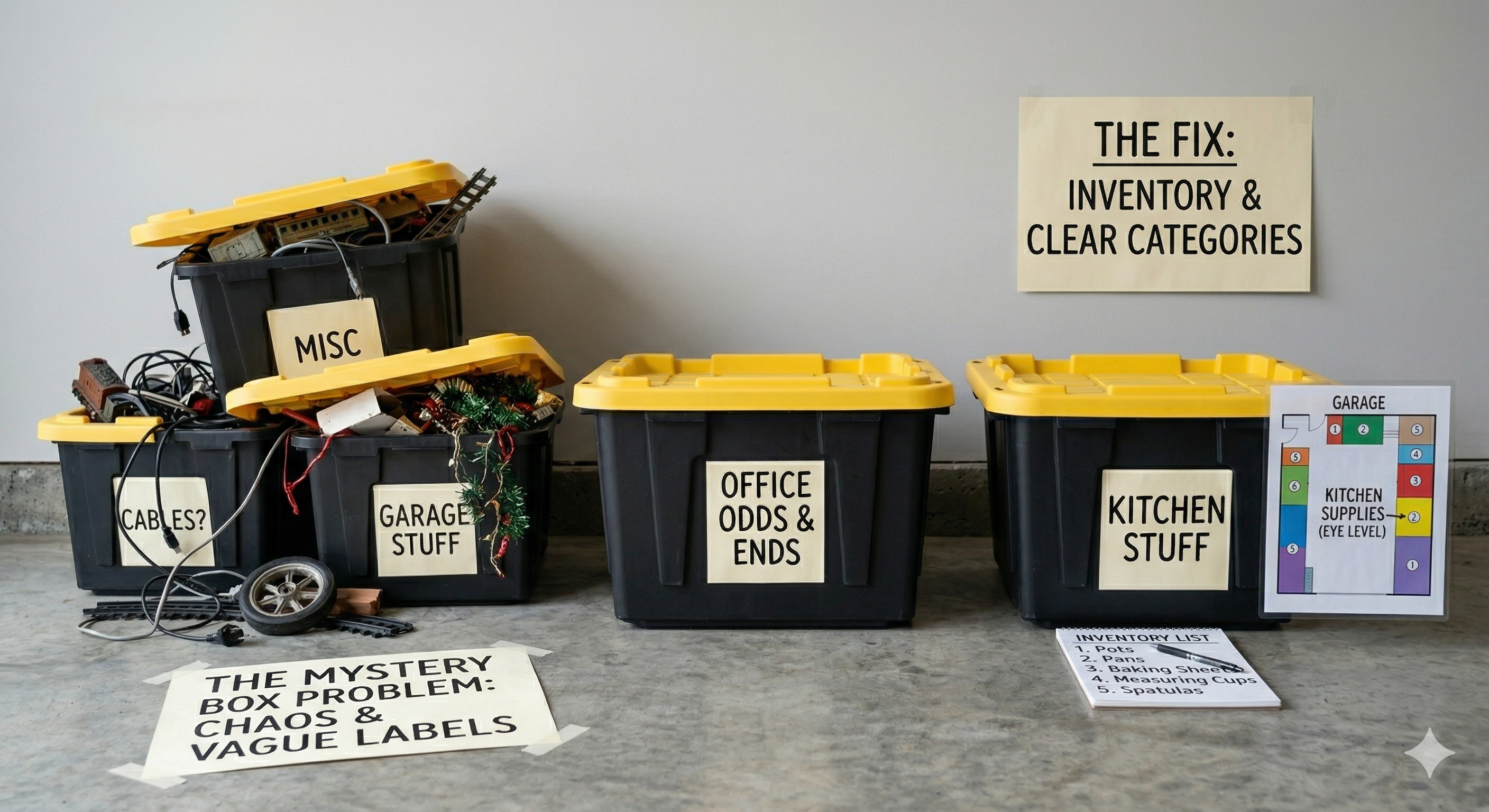
Everyone has them. The mystery boxes. Those storage bins in the garage, basement, attic, or closet that probably contain something useful… but you have no idea what. So what happens? You start digging. One bin becomes three.Three bins becomes six. Twenty minutes later your floor is covered in decorations, cables, or ra
Everyone has them.
The mystery boxes.
Those storage bins in the garage, basement, attic, or closet that probably contain something useful… but you have no idea what.
So what happens?
You start digging.
One bin becomes three.
Three bins becomes six.
Twenty minutes later your floor is covered in decorations, cables, or random household items — and you still haven’t found what you were looking for.
Sound familiar?
The good news is this problem is incredibly common — and incredibly fixable.
Let’s talk about why storage bins become mystery boxes and the simple system that prevents it.
Why Storage Bins Turn Into Mystery Boxes
Storage bins are supposed to make life easier.
But without a system, they actually create hidden clutter.
There are three main reasons this happens.
1. We Store Things Out of Sight
When items disappear into a bin, we often forget what’s inside it.
That’s why experts recommend creating a home inventory of belongings, documenting items room by room so nothing is overlooked.
But most people never take that extra step.
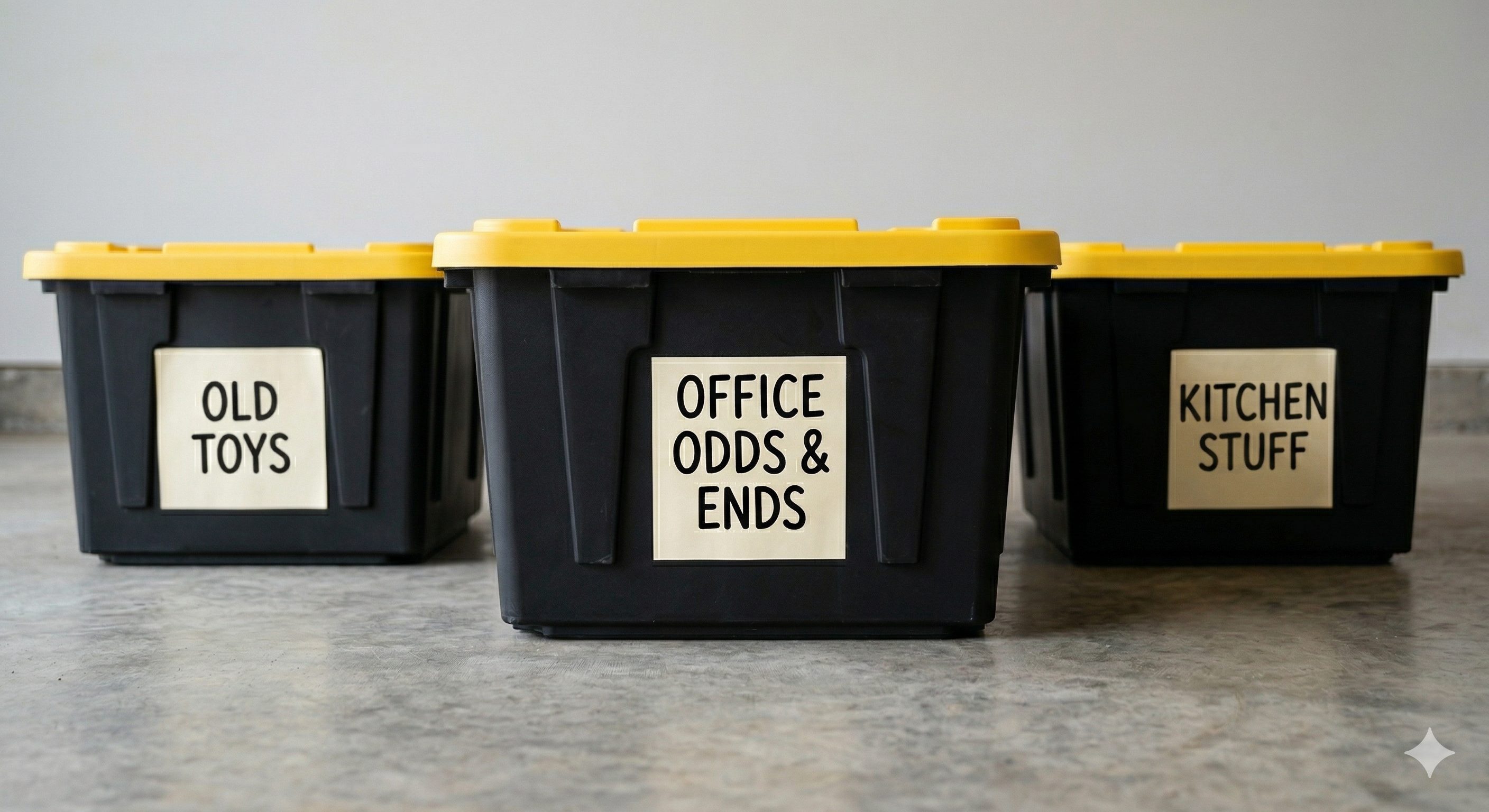
2. Labels Are Too Vague
Many bins are labeled things like:
- “Misc”
- “Garage Stuff”
- “Decor”
- “Cables”
These labels don’t actually help.
When you need something specific, you’re still forced to open the bin.
3. We Don’t Track What’s Inside
Even well‑labeled bins can become confusing over time.
You add a few items.
Move some things around.
Combine two bins.
Suddenly the label isn’t accurate anymore.
This is why experts recommend updating your inventory regularly when items are added or replaced.
The Simple System That Fixes Mystery Boxes
The solution isn’t complicated.
You just need a three‑layer storage system.
Think of it like this:
Bins → Labels → Inventory
Let’s walk through it.
Use Storage Bins by Category
Start by grouping similar items together.
Good categories include:
- Holiday decorations
- Camping gear
- Extension cords
- Kids art supplies
- Moving supplies
- Seasonal clothing
Organizing items by category makes it much easier to locate them later and prevents duplicate purchases.
Label Bins Clearly
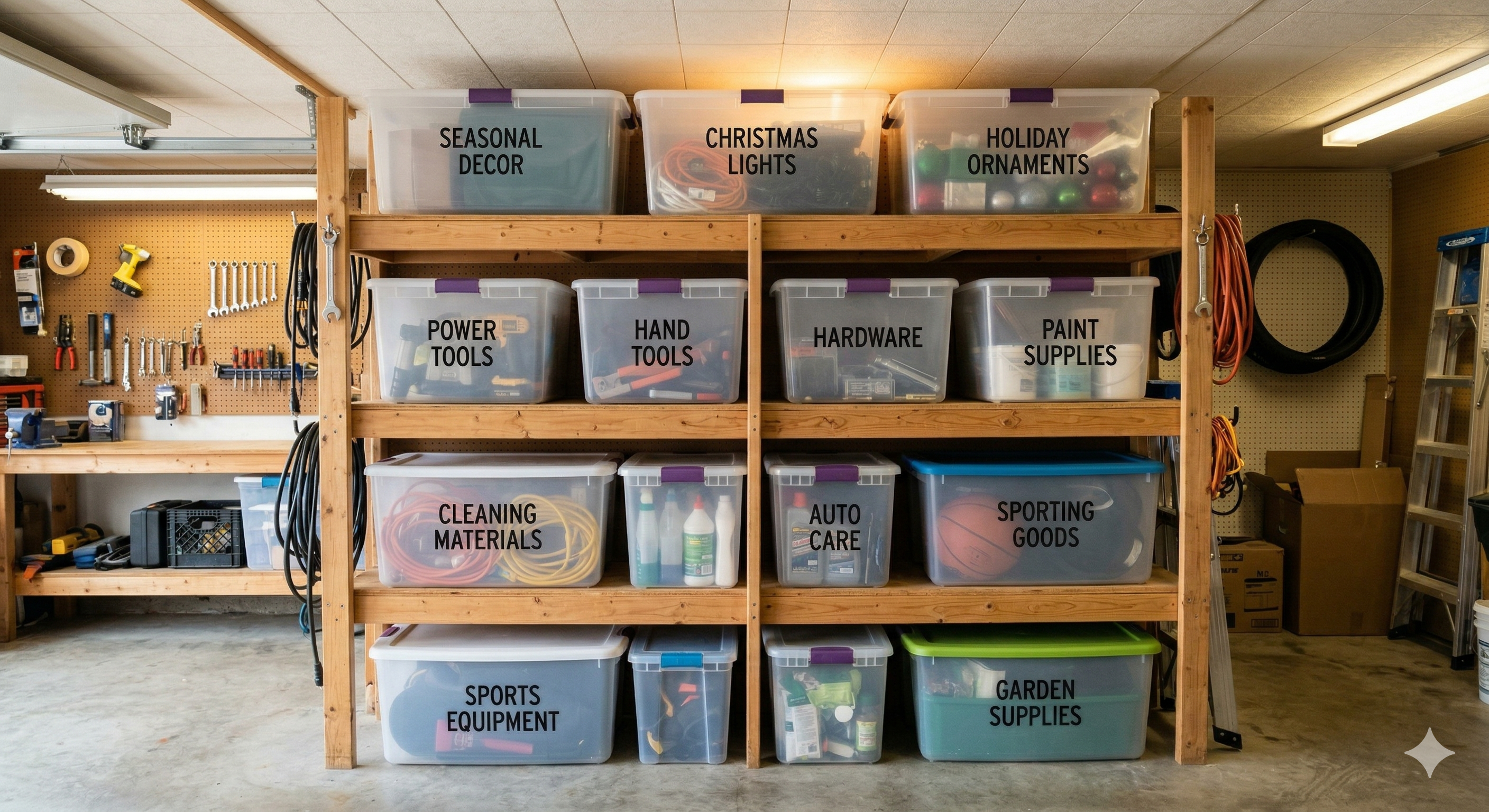
Now label each bin with a specific category.
Good labels look like this:
- Christmas Lights
- Halloween Decorations
- Camping Kitchen
- Power Tools
- Kids Art Supplies
Avoid vague labels like “Misc”.
Clear labels dramatically reduce the time spent searching through containers.
Create a Simple Bin Inventory
This is the step that changes everything.
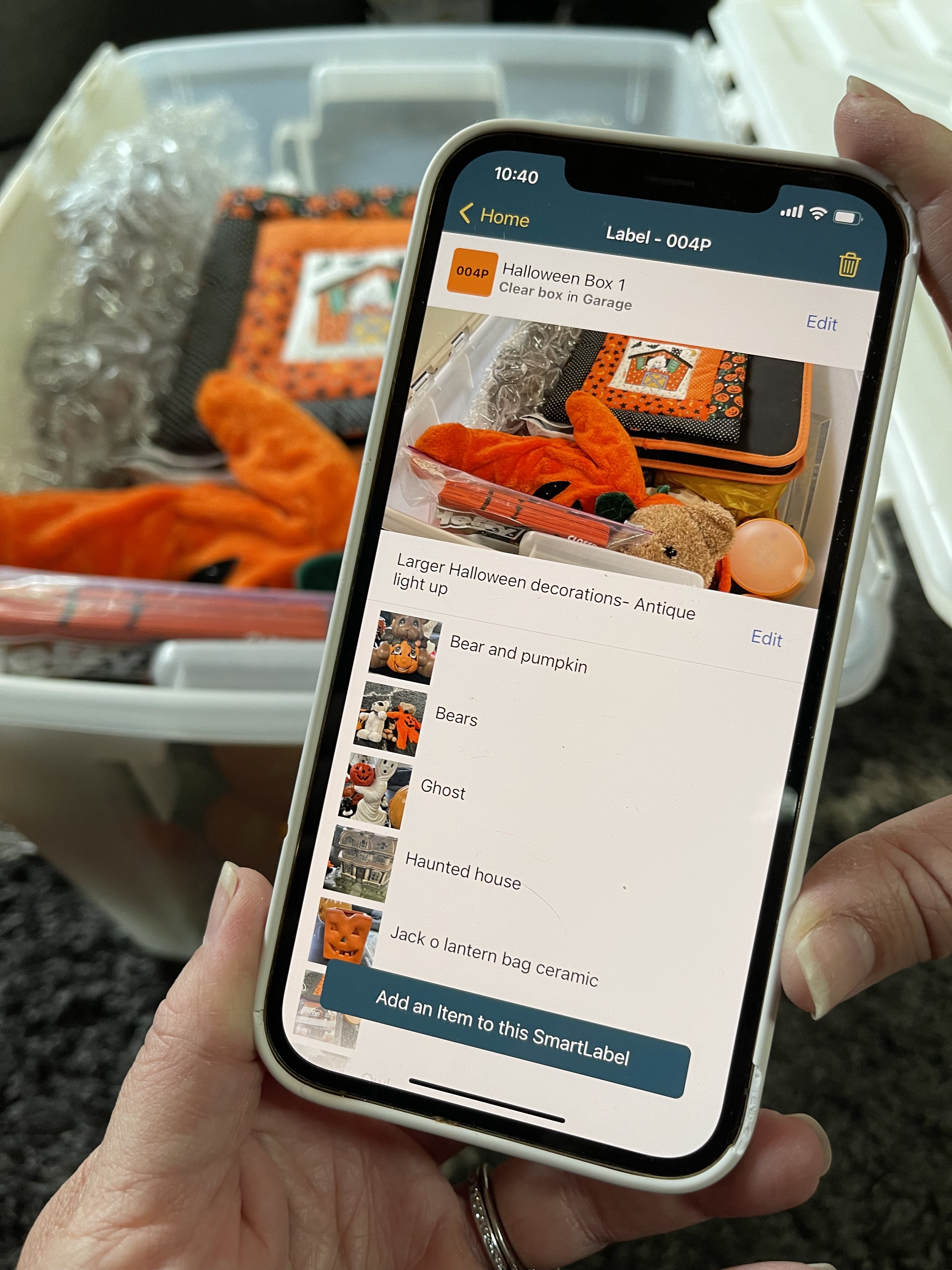
Instead of guessing what’s inside your bins, you create a quick list of contents.
For example:
Bin #12 – Camping Gear
- propane stove
- fuel canisters
- cooking utensils
- headlamps
Bin #7 – Christmas Lights
- white lights (3 strands)
- colored lights (2 strands)
- outdoor extension cord
Taking photos or videos of items while cataloging them can also help document belongings and simplify inventory tracking.
Now instead of digging through bins…
You can look up what’s inside instantly.
Store Bins by Frequency of Use
The final step is organizing where bins live.
Professional organizers often recommend storing rarely used items in harder‑to‑reach areas so everyday spaces stay uncluttered.
Use this simple rule:
Eye level
Frequently used items
Lower shelves
Heavy bins
Top shelves
Seasonal or rarely used items
Examples of top shelf bins:
- holiday decorations
- luggage
- camping gear
- seasonal clothing
The 30‑Minute “Mystery Box Fix”
If your storage space feels chaotic, try this quick reset.
Choose just three bins.
- Open the bin
- Sort items into categories
- Create a clear label
- Record the contents
That’s it.
Three bins today.
Three bins tomorrow.
Before long, your entire storage system becomes searchable.
Final Thoughts
The goal of storage isn’t just putting things away.
It’s being able to find them later.
With a few simple steps:
- clear categories
- specific labels
- a simple bin inventory
your storage bins stop being mystery boxes and start becoming a system.
And once everything has a place, your home becomes dramatically easier to manage.